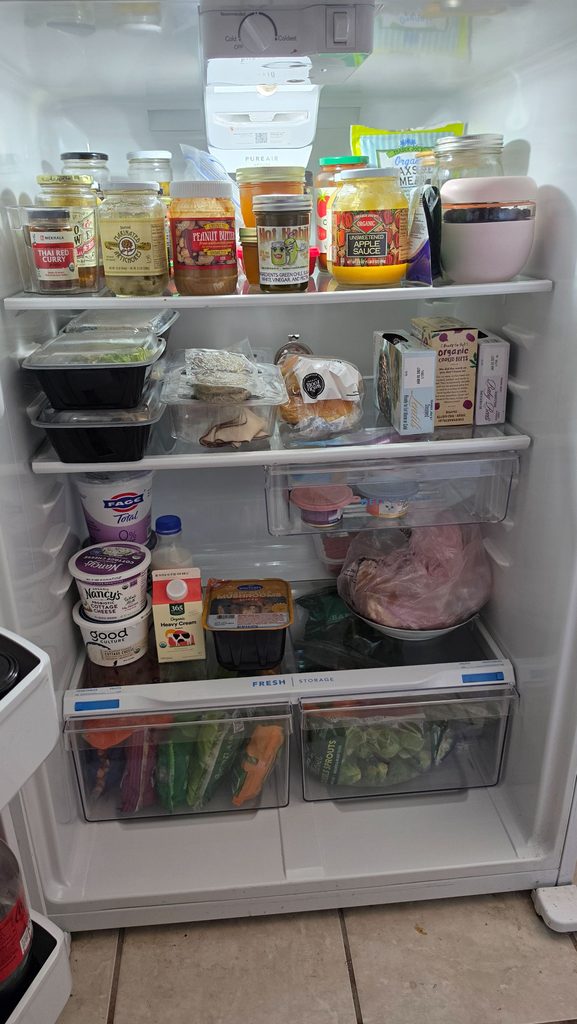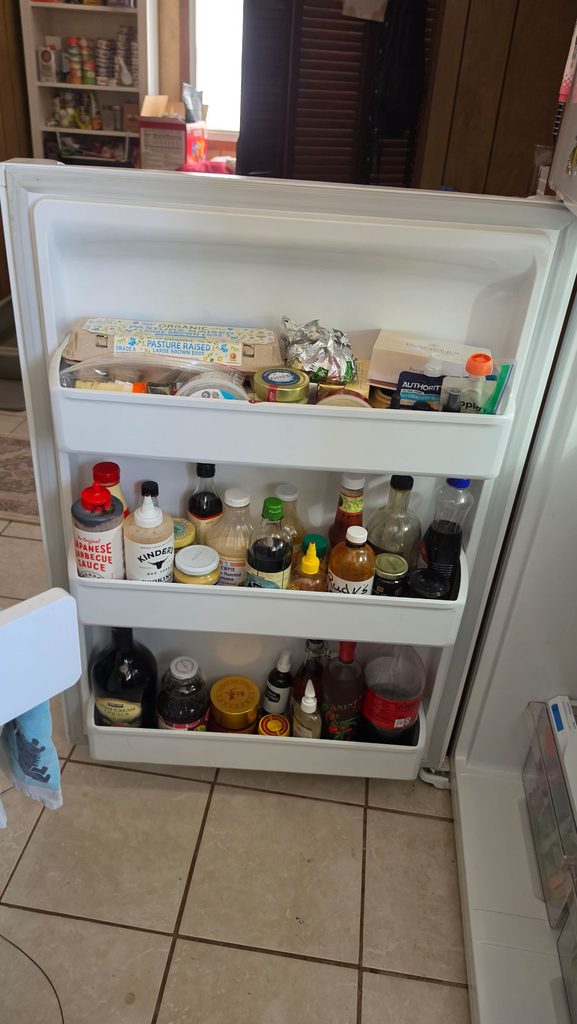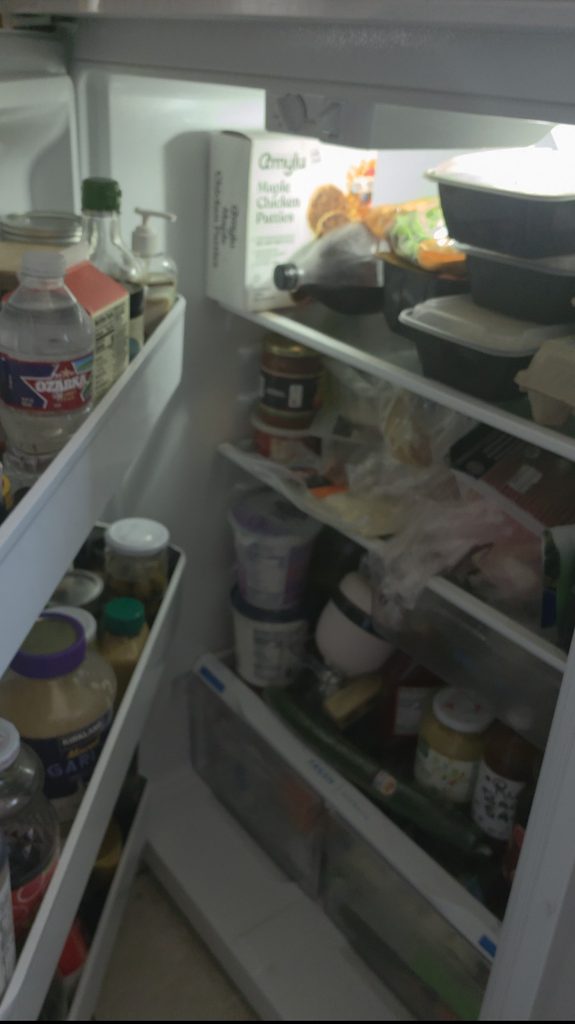
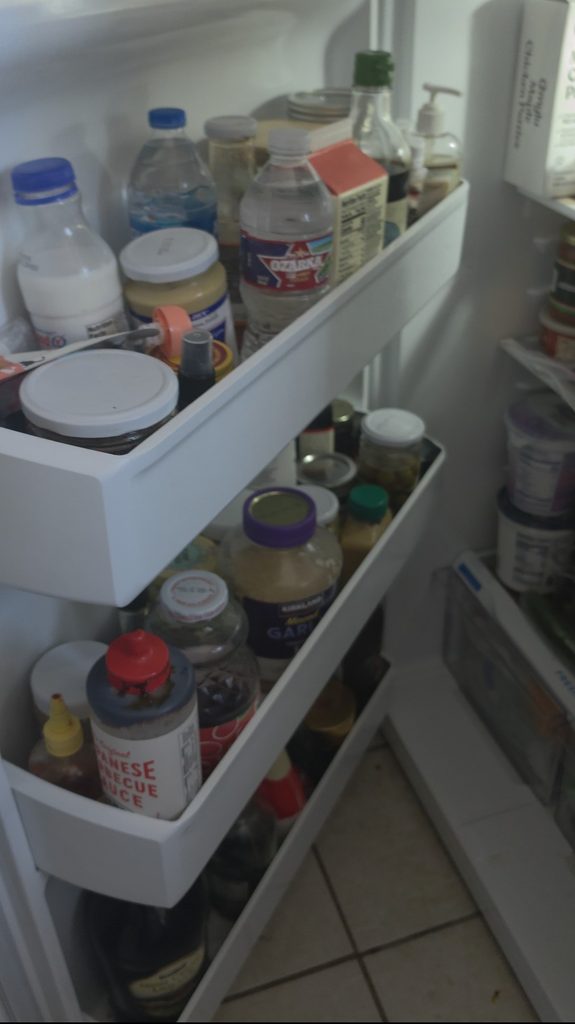
I used to think fridge organization was a personality trait. Either you’re the person with color-coded bins, or you’re me, digging through three half-open jars of salsa to find the butter. Then I started reading a cookbook that laid out some old information I’d honestly never stopped to think about, and it changed how I see my fridge entirely: it isn’t one temperature. It’s more like a little climate map, with genuinely cold zones and genuinely mild ones, and once you know where they are, organizing stops being about tidiness and starts being about actually keeping your food fresher, longer.
This approach is inspired by the food-safety-driven system J. Kenji López-Alt lays out in The Food Lab: Better Home Cooking Through Science. If you want the full deep dive into the science, his book is absolutely worth owning. Here’s how I adapted the underlying logic for my own fridge (and my own chaos).
Your Fridge Isn’t Actually One Temperature
We all know hot air rises, right? Flip that around for your fridge and it means cold air sinks. So the back of your fridge, especially the back of the bottom shelf, is more than likely your coldest spot. The back of the top shelf runs cold too, since it’s usually closest to the cooling vent. And think about it: every time you open the fridge, the door is the first place room-temperature air rushes in, which makes it the warmest real estate in the whole appliance.
Once you accept that your fridge has hot and cold spots the same way an oven does, the rest of this gets a lot more intuitive.
The Zone-by-Zone Breakdown
Top Shelf: Anything Ready to Eat As-Is
This shelf is for food that’s already safe to eat cold, no cooking or further prep required — which, once you group it that way, covers more of the fridge than you’d expect:
- Ready-to-eat jarred foods : marinated artichoke hearts, roasted eggplant spread, olive tapenade
- Opened, ready-to-eat condiments : leftover coconut cream, a jar of harissa, yellow curry paste
- Pickled anything : hot and sweet jalapeños, pickled onions, kimchi (my personal favorite)
- Fruit that doesn’t need high humidity to stay good : pears, citrus, cherries, pineapple
None of it needs the coldest part of the fridge, and it’s all stuff you want to grab without thinking twice, so eye level makes sense.
Middle Shelf: Leftovers, the “Good” Cheese, and Sandwich Stuff
This is where dinner from two nights ago lives (in something that actually seals), along with the cheeses you’re not slicing into daily and anything sandwich-adjacent:
- Leftovers in sealed containers : lentil stew, marinara sauce, extra roasted vegetables
- The cheeses you’re saving for later : the nicer block, not the everyday one
- Cold cuts and sandwich bread : kept together, out of the coldest zone (which also keeps bread from going stale as fast)
Bottom Shelf: Raw Proteins and Everyday Dairy
This is the coldest shelf, so it’s for the two categories that benefit most from the deep chill: raw meat, poultry, and fish, plus the dairy you go through constantly like; milk, yogurt, sour cream. Keeping raw protein down here also means if anything drips, it drips onto an empty shelf, not onto whatever’s below it. I’ve started keeping mine on a plate, just in case.
Crisper Drawer: The Produce That Actually Needs It
With the shelf-stable fruit already living up top, the crisper is reserved for produce that wilts or dries out fast, it’s your leafy greens, herbs, and most vegetables. That’s exactly what that higher humidity setting is designed for.
The Door: Three Shelves, Three Jobs
The door is the warmest part of the fridge overall, but it’s not evenly warm top to bottom. The top of the door tends to run a little cooler than the bottom, since it’s closer to where cold air first circulates in. That gradient maps neatly onto what goes where:
- Top of the door: eggs, butter, and whichever cheese you reach for most. It’s still cold enough, and easy to grab
- Middle of the door: condiments in their original packaging — ketchup, soy sauce, mustard plus any premade vinaigrettes or sauces
- Bottom of the door: drinks, since it’s the most temperature-tolerant shelf in the fridge and the one getting opened constantly anyway
A Few Extra Habits That Make It Stick
- Get an actual fridge thermometer. The built-in dial is a suggestion, not a guarantee — a cheap thermometer can tell you what’s really going on.
- Don’t pack it too tight. Air needs room to circulate, or you end up with warm pockets even in a fridge that’s technically cold enough.
- Practice “first in, front out.” When you unload groceries, move older items to the front so you actually see them before they turn into a science experiment.
- Label and date leftovers. Future-you will not remember what day that soup happened.
Credit Where It’s Due
The zone-based logic here is organizing by temperature, humidity, and food safety instead of just “wherever it fits” and it comes from J. Kenji López-Alt’s writing in The Food Lab. If you want the full science behind it (he gets into a lot more detail, since he’s the actual expert here), his book is a genuinely great read for anyone who likes knowing why a kitchen trick works, not just that it does. It’s packed with useful information.
I just rearranged my own fridge using that logic. Welcome to my newly organized fridge that is backed by science!